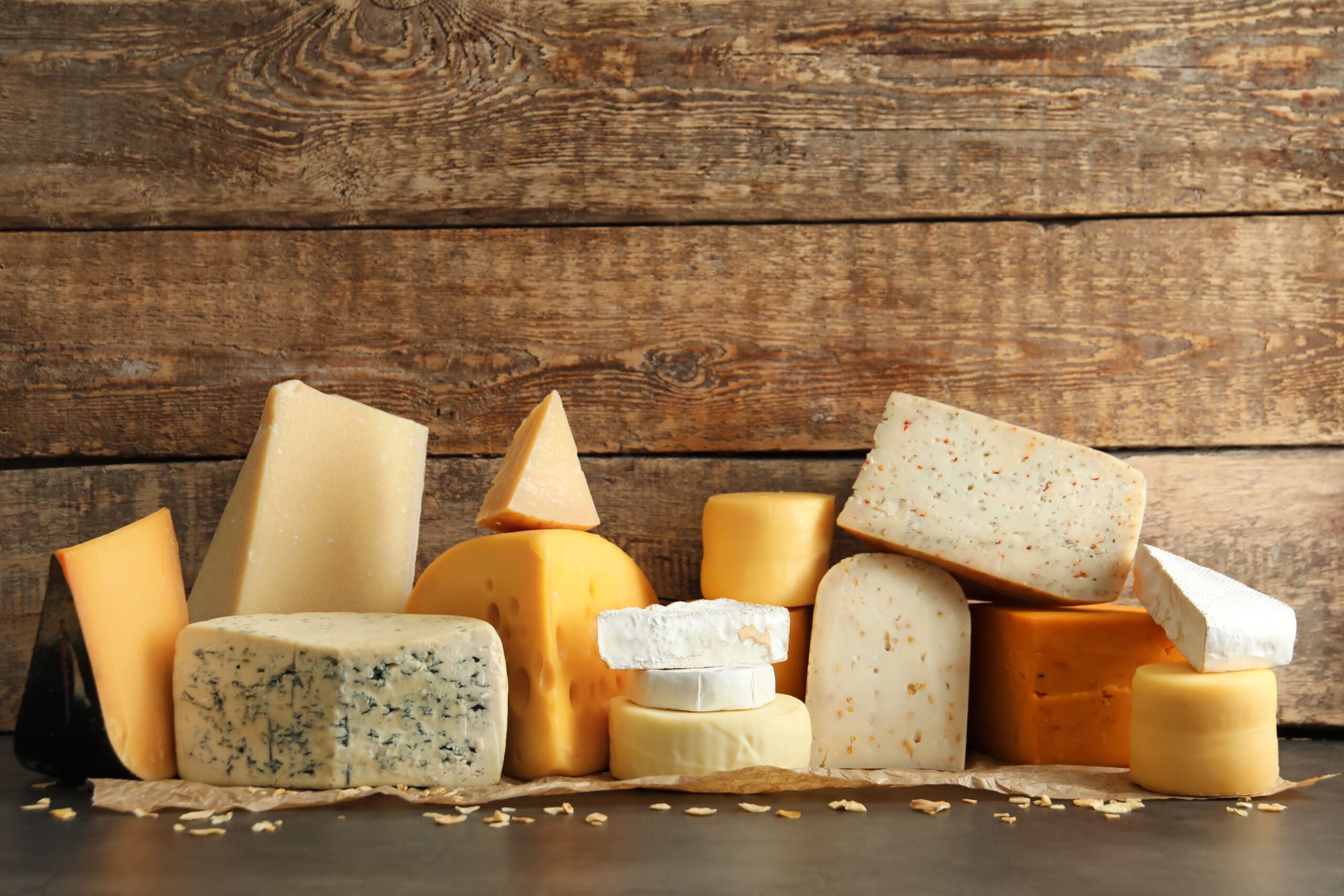
Looking for a heart-healthy addition to your dietary pattern? Consider cheese, a nutrient-rich food including high-quality protein, calcium, phosphorus, and vitamin A. While a systematic review saw no association between cheese consumption and heart disease risk, other studies have linked cheese with a reduced risk of both heart disease and stroke.
Another consideration for heart health is maintaining optimal cholesterol levels. The Dietary Guidelines for Americans (DGA) recommends limiting saturated fats to no more than 10 percent of total calories daily and recognizes that it is possible to include whole milk and full-fat cheeses and stay within these calorie limits.
Preventing elevated blood pressure by limiting high-sodium (or salt) foods is also beneficial for heart health. Swiss and ricotta are naturally low sodium, while other varieties sold on the market have reduced sodium options. Investigating cheese’s impact on heart health, a systematic review found no associations between eating cheese and blood pressure risk.
Consuming cheese is another way to meet the DGA’s recommended three daily servings of dairy.
| Cheese Serving Sizes |
|---|
| 1 ½ ounces hard cheese (cheddar, mozzarella, Swiss, Parmesan) ⅓ cup shredded cheese 1 ounce processed cheese (American) ½ cup ricotta cheese 2 cups cottage cheese 2 ounces Queso fresco 2 slices Queso blanco |