Health Benefits of Cheese
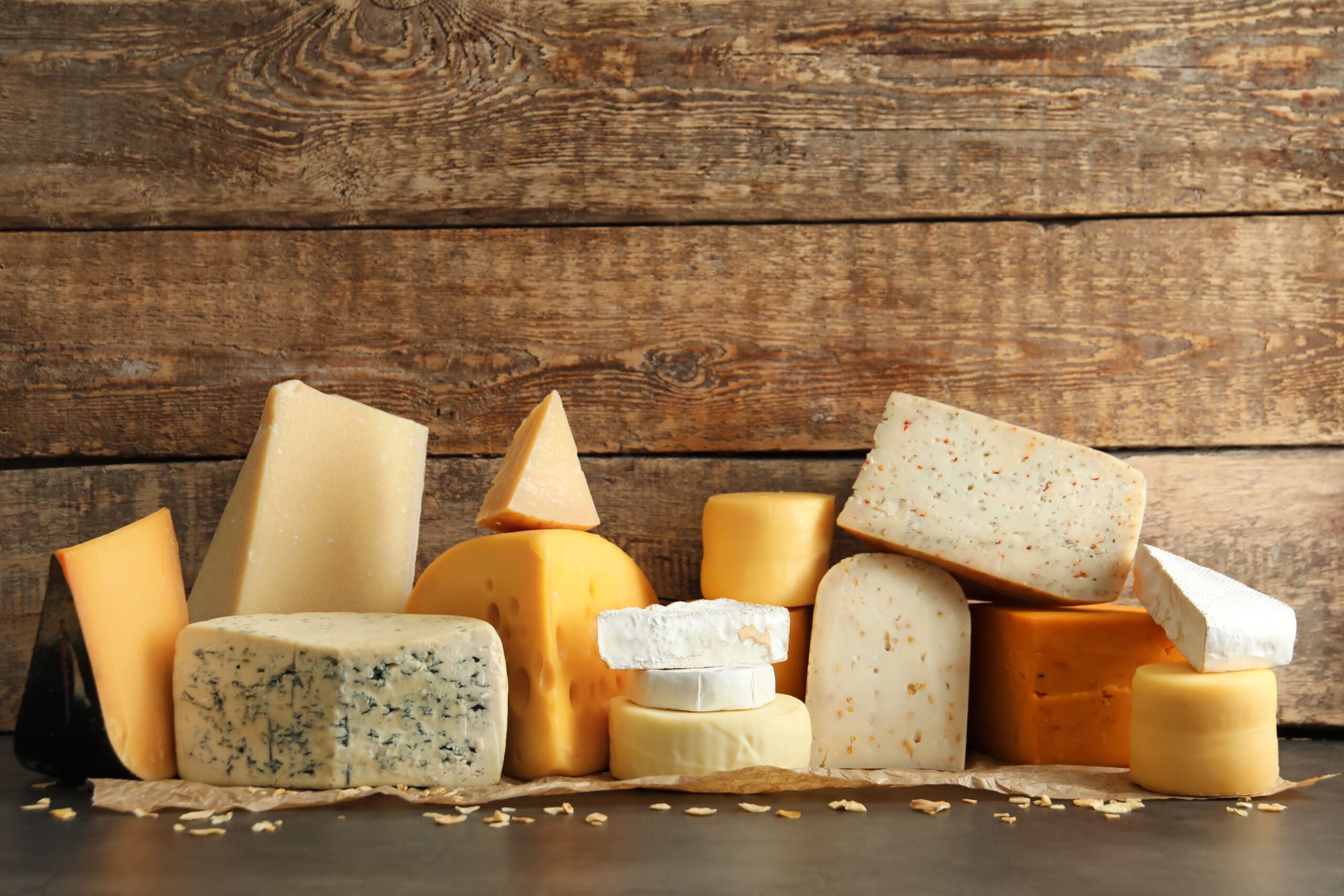
With nearly 2,000 types of cheese available worldwide, it’s no wonder that the average American consumes about 40 pounds of cheese per year (about 1.5 ounces per day). Cheese, however, is more than just a delicious part of our favorite meals and snacks – cheese makes significant contributions to a healthy diet.
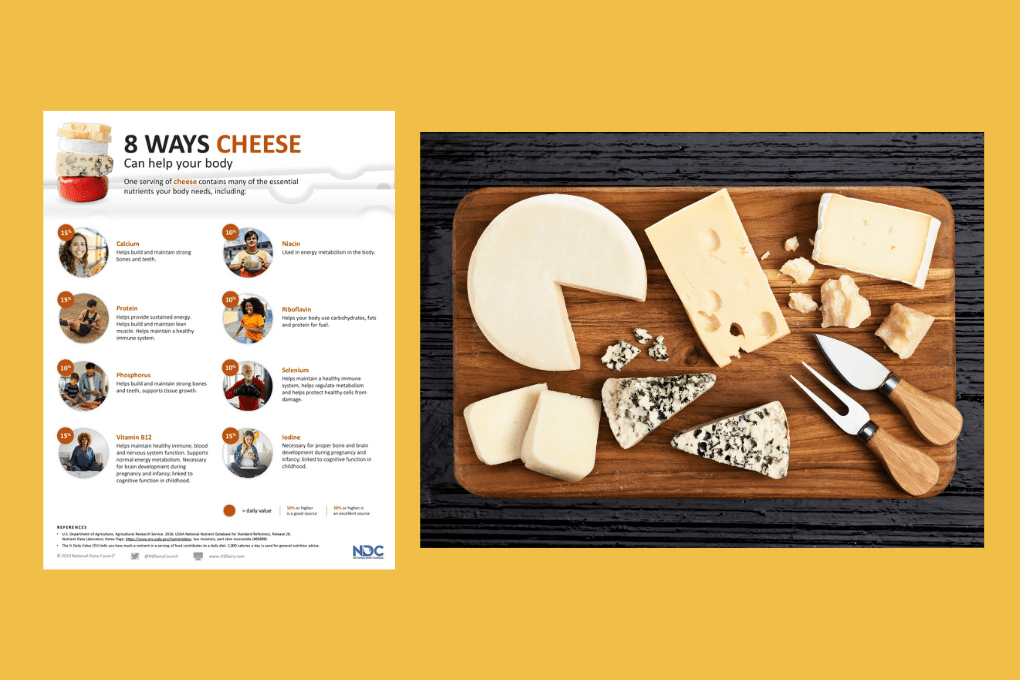
Cheese is a good source of high-quality protein and contributes other essential nutrients such as calcium, phosphorus and vitamin A to the U.S. diet. Cheese is the second leading food source of dietary calcium in the U.S. diet (after milk) for Americans 2 years and older. Cheese calories range depending on the type and fat content, but a 1 oz serving of cheese contains around 100 calories.
The 2020-2025 Dietary Guidelines for Americans (DGA) recognizes that dairy foods, including cheese, play an important role in healthy eating patterns from infancy through adulthood. Healthy eating patterns that include low-fat or fat-free dairy foods are associated with reduced risk for several chronic diseases, including cardiovascular disease (CVD) and type 2 diabetes (T2D). In addition, dairy foods provide calcium and protein, which are particularly important for accruing peak bone mass in early adulthood.
Dairy foods help people thrive across the lifespan – including the earliest stages. The DGA recommends providing small amounts of cheese and yogurt as complementary foods to infants beginning around 6 months of age, depending on developmental readiness.
The DGA recommends 2 daily servings of low-fat or fat-free dairy foods for children 2-3 years, 2½ for children 4-8 years and 3 for those 9 years and older in the Healthy U.S.-Style Dietary Pattern. While the DGA recommends low-fat or fat-free dairy foods for Americans ages 2 years and older, most of the cheese eaten in the U.S. is not low-fat or fat-free. Food pattern modeling, however, indicates that one serving of whole- or reduced-fat cheese can be incorporated into healthy dietary patterns while staying within recommended calorie and saturated fat levels.
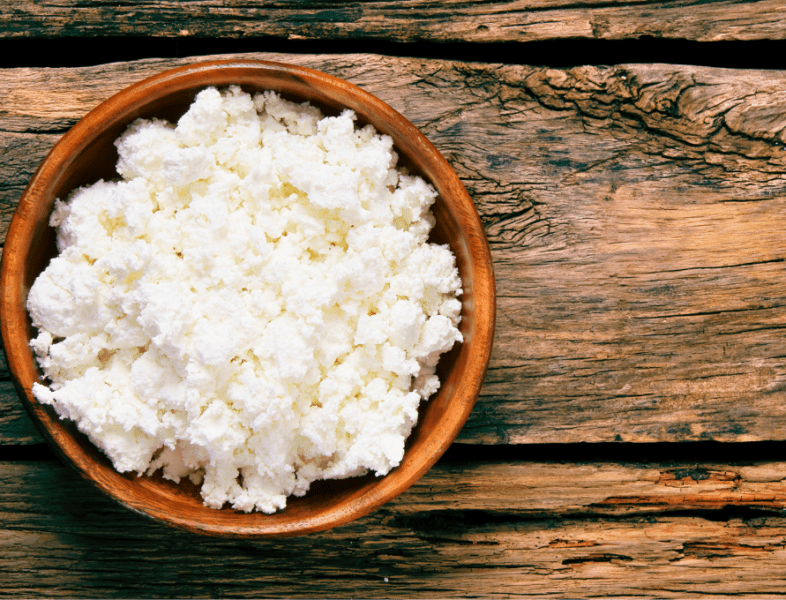
Salt is a vital part of the cheese-making process, as it controls moisture, texture, taste, functionality, and food safety — salt cannot be completely eliminated and some cheeses require less than others. Some cheeses like Swiss and ricotta cheese tend to be made with less sodium and are naturally low-sodium choices. Ninety-two percent of sodium in the U.S. diet comes from sources other than cheese.
If you are lactose intolerant, cheese can still be a part of your diet. Natural and aged cheeses such as Cheddar, Colby, Monterey Jack, mozzarella, Parmesan and Swiss contain minimal amounts of lactose, because most of the lactose is removed when the curds are separated from the whey in the cheese making process. The minimal lactose left in the curd breaks down considerably as the cheese ages.
What Does the Research Say?
While the 2020-2025 DGA recommends choosing low-fat or fat-free dairy foods, emerging evidence suggests that full fat dairy foods can fit within healthy eating patterns. Additionally, the DGA recommends limiting intake of saturated fat to no more than 10% of calories per day, so full-fat dairy foods, like cheese, can fit into a healthy eating pattern within saturated fat intake limits.
Eating cheese has been linked with health benefits. A 2016 systematic review indicated no association between cheese consumption and CVD risk, and concluded that eating cheese may be associated with a lower risk for stroke and T2D. The same review also concluded that high-quality evidence indicates no link between cheese consumption and the risk for hypertension.
Additional studies concluded that eating cheese was linked to a lower risk of CVD, including stroke, reduced blood pressure, as well as an 8 percent lower risk of developing high blood pressure. The health benefits of cheese may be linked to the cheese matrix, or unique physical structure of cheese. More research is needed to understand the dairy matrix and its promising impact on health.