As a pediatric Registered Dietitian and School Food Service Director, I search for recipes that improve nutritional value and support lifelong healthy eating habits. Finding recipes that meet nutrition goals, appeal to students, and fit into busy school kitchen operations can be challenging.
When I discovered the Smart Swaps recipes, I immediately recognized their potential. I had been looking for additional breakfast recipes that were easy to prepare, fit seamlessly into our kitchen operations, meet new USDA sugar guidelines that go live July 1, 2027, and address parent/student demand for healthier options. I also appreciated that the recipes could easily incorporate USDA Foods and locally sourced ingredients.
Here is how we added these recipes to our menu.
Introducing New Recipes to Staff

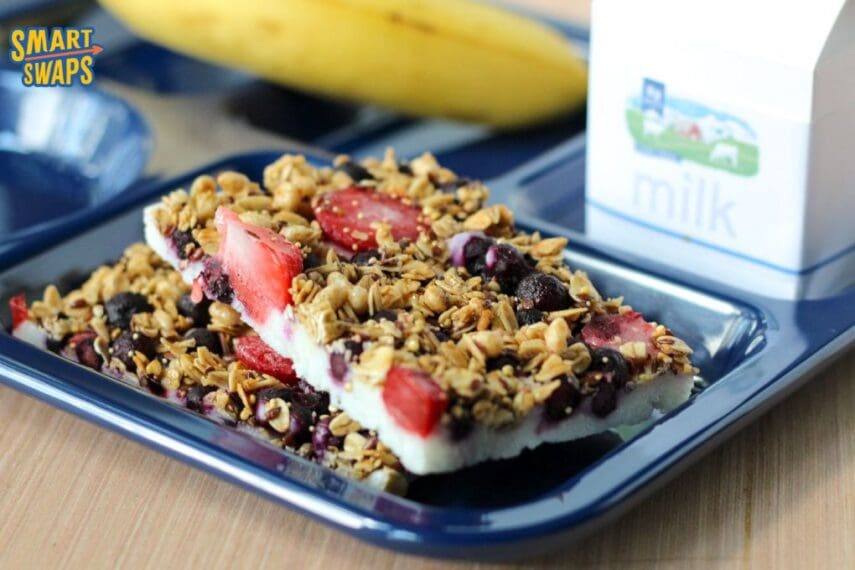
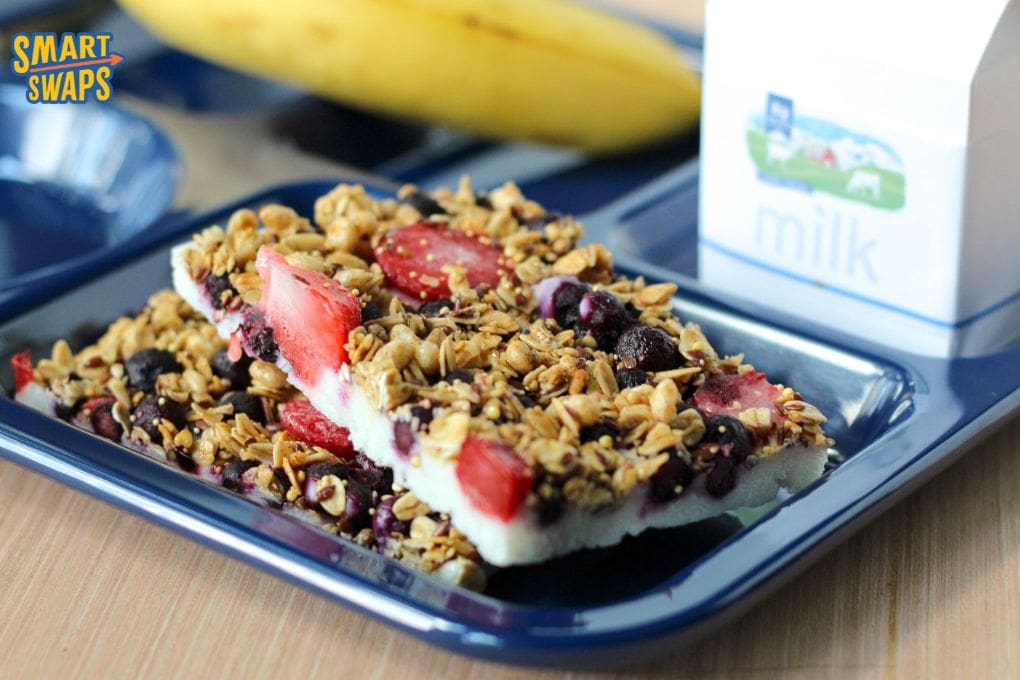
We introduced our first Smart Swap recipes, the Go Green Smoothie, Chunky Monkey Smoothie, Apple Nachos, and Frozen Yogurt Bark in December 2025.
Before serving them to students, we reviewed each recipe with our staff, identified preparation steps that could be completed ahead of time, and determined what small equipment and storage containers would improve efficiency.
Initially, staff worried the recipes would add time to already busy mornings. To address this concern, we planned to introduce one or two new recipes each month.
Planning ahead and working through potential challenges together made the transition much smoother. Once staff saw how much students enjoyed the recipes—and recognized their nutritional benefits—they fully embraced the new menu items.
Benefits of Taste Testing with Students
During National School Breakfast Week, we offered taste tests featuring Chicken and Waffles with Honey Mustard Dipping Sauce and Apple Nachos.
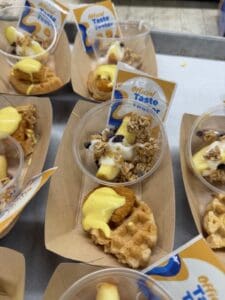
Students’ overwhelmingly positive response led us to permanently add both recipes to our breakfast menu. The benefits of doing taste tests are that they:
- Encourage students to try new foods in a fun, low-pressure environment, increasing their willingness to try unfamiliar items
- Allow our team to collect valuable feedback on new recipes
- Encourage students to share additional menu items they would like to see offered
- Help us identify new recipes that students are more likely to accept and enjoy
- Give staff the opportunity to prepare new recipes on a smaller scale and provide feedback before districtwide implementation
- Improve communication between food service and administration teams
A New Perspective on Marketing

The taste tests also changed how we market school breakfast.
By working closely with students, staff, and administrators, we discovered new ways to build excitement around breakfast and communicate menu changes more effectively. Through the taste tests, we expanded our marketing efforts by:
- Displaying weekly breakfast menus on digital signage throughout each school
- Sharing breakfast menus with families through the district’s parent communication platform
- Having the principal announce the following week’s breakfast menu during Friday lunch periods.
- Highlighting locally sourced ingredients and new recipes on our menus
- Promoting seasonal recipes, such as the Go Green Smoothie as the “Grinch Smoothie” in December, the “Shamrock Smoothie” in March, and a featured item for Eat More Fruits and Veggies Day in May. While it may be the same recipe each time, giving it a new seasonal name keeps it fun for students
- Customizing promotions to match each school’s interests and student preference is key!
These simple changes generated excitement and encouraged more students to participate in breakfast.
Program Impact
Combining Smart Swaps recipes with stronger marketing produced measurable results. Breakfast participation increased by approximately 78%. Student breakfast participation increased from 9-16%.
Replacing two higher-sugar breakfast options with protein-forward Smart Swaps recipes also improved the nutrition of our meals. Added sugar was reduced by about 4 grams, while average protein was increased by about 3 grams.
Families noticed the difference, too. Parents shared that their children looked forward to smoothie days, while students described the Apple Nachos as “amazing” and told us they “loved” the smoothies.
The recipes also gave us more opportunities to feature local foods, including apples, yogurt, milk, eggs, berries, spinach, and homemade granola made with local honey or maple syrup.
Things We Learned
- Staff buy in and student opinions are critical.
- Seeking staff feedback on the recipe implementation engaged staff in this change and make the recipe launch successful.
- Working with the food service staff, students and administration helped us tailor marketing to the needs of each individual school in the district.
- Students seeing their suggestions appear on future menus strengthened their connection to the breakfast program and gave us valuable ideas for future offerings.
- We also discovered that following a standardized taste test procedure—from planning through marketing—created a much smoother experience. New England Dairy’s taste test toolkit provided helpful procedures and promotional ideas that made implementation easier. I would highly recommend checking it out for practical, step-by-step guidance.
Looking Ahead

Next school year, we plan to expand our Breakfast Smart Swap menu with recipes such as Peaches n’ Cream Dip, Strawberry Pancake Yogurt Parfait, and Breakfast Grilled Cheese.
Additionally, we are excited to review and incorporate the new Lunch Smart Swap Recipes, including Enchiladas Verdes, Cuban Sandwich, and Esquites Mexican Street Corn Salad, to name a few!
The sample breakfast and lunch menus are easy to follow, meet the USDA nutrition standards, and are organized to meet any level of kitchen operational needs. These resources will help map out how to integrate recipes into existing menus.
During back-to-school staff training, we’ll prepare the recipes together, review our new equipment, and continue refining our processes before students return.
Our experience demonstrated that improving school breakfast involves much more than changing recipes. Success comes from engaging staff, listening to students, and promoting nutritious choices in creative ways. When those pieces come together, healthier breakfasts become meals students are excited to choose.